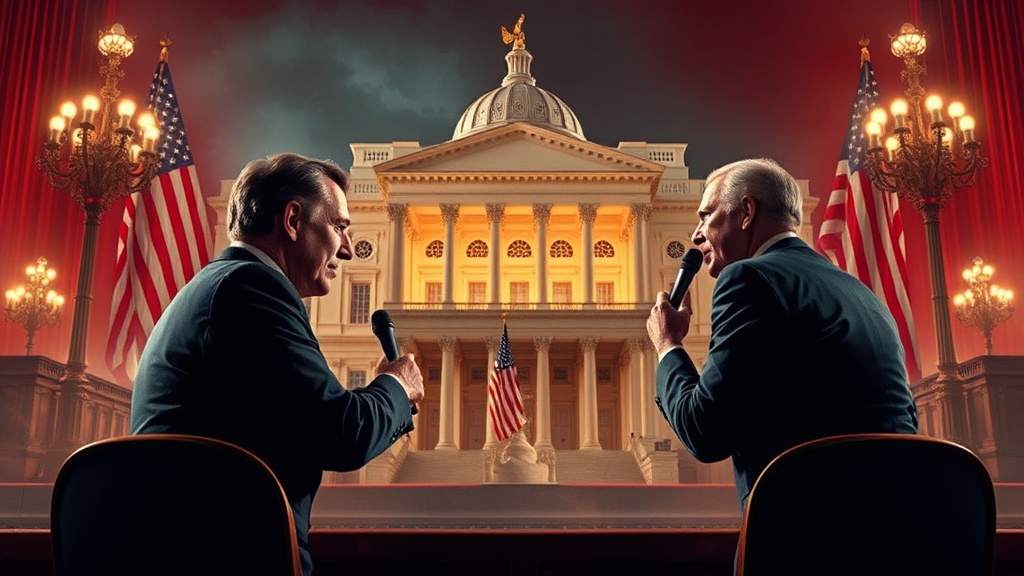
Political Scandals That Shaped History and Inspired Hollywood

The Watergate Scandal (1972-1974)
The Teapot Dome Scandal (1921-1923)
The Iran-Contra Affair (1985-1987)
The Profumo Affair (1963)
The Pentagon Papers Leak (1971)
Political scandals have long served as fertile ground for filmmakers seeking stories that captivate audiences without requiring embellishment. This post examines five major political controversies that didn't just change the course of history—they became the foundation for acclaimed films, television series, and documentaries. You'll discover how Watergate, the Profumo affair, and other watershed moments transitioned from newspaper headlines to Oscar-winning cinema. (Reality, as it turns out, writes the best scripts.)
What political scandal inspired "All the President's Men"?
The Watergate scandal—specifically the 1972 break-in at the Democratic National Committee headquarters and the subsequent cover-up that led to President Richard Nixon's resignation in 1974—became the basis for Alan J. Pakula's 1976 masterpiece. The film didn't just dramatize events; it created the template for how Hollywood approaches political thrillers.
Robert Redford and Dustin Hoffman portrayed Washington Post reporters Bob Woodward and Carl Bernstein, whose dogged investigation exposed the conspiracy. The production team worked from the journalists' own book, consulting actual newsroom layouts at the Post's offices on 15th Street to ensure authenticity. William Goldman's screenplay compressed months of investigation into a narrative that somehow maintained urgency despite viewers knowing the outcome.
The film's influence extends beyond storytelling techniques. It cemented the visual language of investigative journalism on screen—the cluttered desks, the yellow legal pads, the late-night phone calls from pay phones. (Gene Roberts, then editor of The Philadelphia Inquirer, reportedly sent his entire reporting staff to see it.) Even the film's color palette—muted browns and grays—established a aesthetic that persists in political dramas today.
Which British scandal became "Scandal" (1989)?
The Profumo affair—a 1963 British political scandal involving Secretary of State for War John Profumo, model Christine Keeler, and a Soviet naval attaché—inspired Michael Caton-Jones's "Scandal." The controversy brought down Prime Minister Harold Macmillan's Conservative government and reshaped British attitudes toward establishment figures.
John Hurt portrayed Stephen Ward, the osteopath and socialite who introduced Profumo to Keeler at Cliveden, the Buckinghamshire estate owned by Lord and Lady Astor. The film courted controversy upon release; some critics argued it humanized Ward, who died by suicide following his conviction for living on immoral earnings. (The British Board of Film Classification initially demanded cuts.)
What distinguishes "Scandal" from American counterparts is its treatment of class. The film understands that Profumo's real crime, in the eyes of the British establishment, wasn't adultery—it was lying to Parliament and, worse, becoming entangled with people outside his social stratum. The Cliveden set's casual privilege—weekend parties, casual betrayals—feels genuinely transgressive rather than merely titillating.
How do political scandals become compelling cinema?
Filmmakers face a particular challenge when adapting real political controversies: the audience often knows the ending. Here's the thing—the best adaptations don't focus on outcomes. They concentrate on process, on the accumulation of detail, on the moment when certainty shifts into doubt.
Consider "The Post" (2017), Steven Spielberg's treatment of the Pentagon Papers case. The film doesn't hinge on whether The Washington Post will publish—history settled that question decades ago. Instead, it dramatizes Kay Graham's decision to risk her family's newspaper, her fortune, and her reputation on principle. Meryl Streep's performance captures Graham's hesitation, her consultation with board members, her recognition that leadership sometimes means choosing between bad options and worse ones.
The catch? Accuracy becomes negotiable. "Vice" (2018) took liberties with Dick Cheney's private conversations. "The Front Runner" (2018) compressed the collapse of Gary Hart's presidential campaign into days rather than weeks. Documentaries face different constraints—"The War Room" (1993) embedded filmmakers Chris Hegedus and D.A. Pennebaker inside Bill Clinton's 1992 campaign, creating a vérité record that remains unmatched for access.
Scandals and Their Hollywood Adaptations: A Comparison
| Historical Event | Film/TV Adaptation | Year Released | Key Figures Portrayed | Awards Recognition |
|---|---|---|---|---|
| Watergate break-in and cover-up | All the President's Men | 1976 | Robert Redford, Dustin Hoffman | 4 Academy Awards including Best Supporting Actor |
| Profumo affair | Scandal | 1989 | John Hurt, Joanne Whalley | BAFTA nomination for Best Costume Design |
| Pentagon Papers | The Post | 2017 | Meryl Streep, Tom Hanks | 2 Academy Awards, Golden Globe for Best Drama |
| Bill Clinton 1992 campaign | The War Room | 1993 | James Carville, George Stephanopoulos | National Board of Review Best Documentary |
| 2008 financial crisis | The Big Short | 2015 | Christian Bale, Steve Carell | Academy Award for Best Adapted Screenplay |
That said, the table reveals patterns. Political scandal films cluster around particular eras—the mid-1970s, the early 1990s, the late 2010s—suggesting that cultural receptiveness to institutional criticism waxes and wanes. The 1970s films carried Watergate's immediate aftermath; the 2010s entries responded to financial collapse and renewed skepticism about political elites.
What scandal inspired "The Queen" (2006)?
The death of Diana, Princess of Wales, in 1997—and the subsequent controversy over the Royal Family's response—inspired Stephen Frears's "The Queen." The film focuses on the week following the Paris car crash, examining the tension between Tony Blair's New Labour government and Buckingham Palace's traditional protocols.
Helen Mirren's portrayal of Elizabeth II won her the Academy Award for Best Actress, but the film's real subject is institutional adaptation under pressure. The Royal Family's initial refusal to fly flags at half-mast over Buckingham Palace—protocol technically didn't require it for a former member no longer styled "Royal Highness"—generated unprecedented public backlash. The film captures the moment when centuries of precedent collided with modern media expectations.
Michael Sheen's Tony Blair provides the audience entry point, a politician discovering that leadership sometimes requires dragging ancient institutions toward necessary change. (The film's depiction of their subsequent relationship—warm initially, then strained—proved remarkably prescient.) Peter Morgan's screenplay originated as a stage play, which explains its claustrophobic intensity; much of the drama unfolds in rooms where no cameras could actually penetrate.
Why do political scandal films resonate decades later?
These stories persist because they address questions that don't expire with headlines. What happens when institutions fail? How do individuals respond when faced with evidence of wrongdoing by powerful figures? What price comes with telling the truth?
The 2019 miniseries "Chernobyl"—technically about institutional incompetence rather than scandal, though the distinction blurs—demonstrated that audiences still hunger for narratives about institutional accountability. Craig Mazin's five-episode examination of the 1986 nuclear disaster attracted HBO's highest ratings for a limited series since "Big Little Lies." The writing resisted easy heroism; Jared Harris's Valery Legasov saves countless lives while remaining complicit in a system that made catastrophe inevitable.
Worth noting: streaming platforms have altered how these stories reach audiences. Netflix's "The Crown"—which devoted its fifth season to the collapse of Charles and Diana's marriage—reaches viewers who might never purchase tickets to "The Queen." The extended format allows for complexity that two-hour films must compress. The New York Times's documentary unit has similarly expanded into long-form series, blurring boundaries between journalism and entertainment.
Contemporary scandals await their Hollywood treatment. The Theranos fraud already generated "The Dropout" (2022). The FTX collapse and Sam Bankman-Fried's trial seem inevitable source material. What distinguishes enduring adaptations from forgettable ones isn't the magnitude of the scandal—it's the filmmaker's willingness to resist easy moral categorization. The best films understand that systems fail gradually, that complicity spreads like mold rather than striking like lightning, and that the people who expose wrongdoing often pay prices that outlast any awards season recognition.
Robert Redford reportedly pursued the Watergate film rights before Nixon even resigned, recognizing that the story transcended partisan politics. That instinct—to identify which headlines contain permanent human drama—separates journalism that informs from journalism that disappears. Hollywood, when it works at its best, performs a similar service, preserving moments when power encountered accountability and the outcome remained genuinely uncertain.