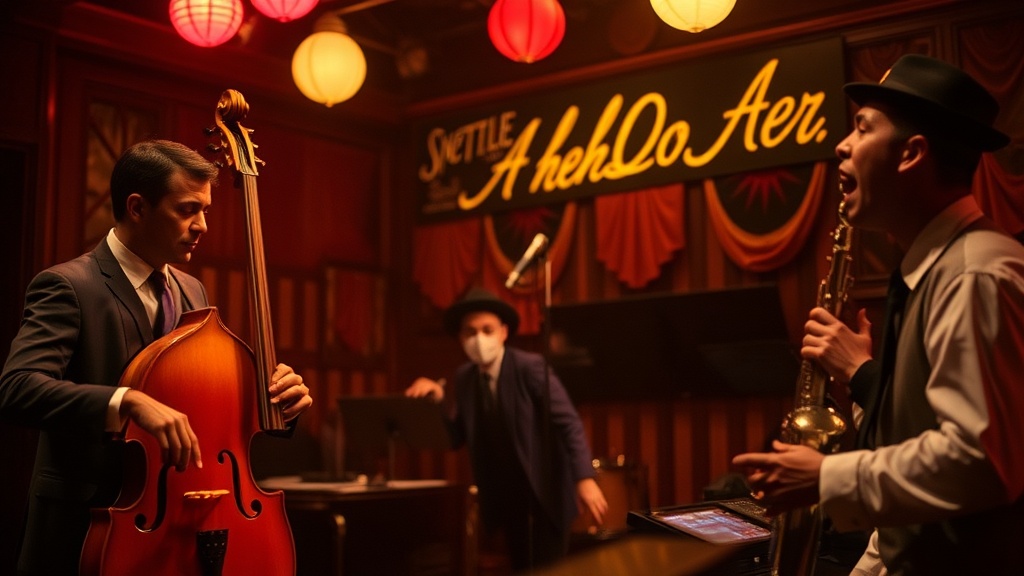
The Hidden Influence of 1920s Jazz on Modern Pop Culture

Why is Jazz often dismissed as just background music?
Most people think of Jazz as a soft, polite genre—something played in a quiet lounge while people sip cocktails. This is a massive misunderstanding of the era's actual energy. In the 1920s, Jazz wasn't just a musical style; it was a cultural explosion that broke social norms, challenged racial hierarchies, and fundamentally altered how people interacted with technology and nightlife. It was loud, it was disruptive, and it changed the DNA of popular music forever.
When we look at the roots of modern music, we aren't just looking at melody and rhythm—we're looking at the way Jazz forced the world to listen. It introduced the concept of the solo, the idea that an individual could break away from the collective structure to express something deeply personal. This impulse is the grandfather of everything from rock and roll to modern hip-hop. If you ignore the social weight of the Jazz Age, you miss the reason why the music sounded the way it did.
The Social Impact of the Jazz Age
The 1920s weren't just about flappers and speakeasies; they were about a shift in human behavior. The introduction of the phonograph meant that music was no longer a live-only experience. You could bring the sounds of a New Orleans nightclub into a living room in Chicago. This democratization of sound changed how different social classes and races connected. While segregation remained a harsh reality, the music created a shared language that transciter boundaries in ways the legal system hadn't yet caught up to.
Consider the way the radio transformed the home. Before this-era technology, music was a localized event. Once the radio took hold, a single rhythm could capture the attention of a whole nation. This was the first real instance of a "viral" cultural movement. The syncopation found in jazz tracks didn't just change the way people danced—it changed the way they thought about time and tempo in their daily lives. It was a faster, more erratic way of living that mirrored the industrial shifts of the decade.
How did Jazz change the way we consume music?
If you look at the evolution of music through the lens of technology, the Jazz Age is the most significant turning point. The development of recording techniques allowed for the capture of improvisation. You can't capture the soul of a jazz solo with standard sheet music alone; you need the recording. This forced the industry to move away from the "written" and toward the "performed."
This shift created a new kind of celebrity. Musicians weren't just players; they were icons. The demand for high-fidelity sound and better recording equipment grew alongside the popularity of the genre. To understand the current obsession with "vintage" sound, you have to understand the technological-driven boom of the 1920s. You can read more about the history of early recording technology at the Smithsonian Magazine archives to see how these tools shaped the sound.
What are the most influential Jazz movements to study?
To truly grasp the depth of this era, you can't just listen to one song. You have to see the progression. The movement started with ragtime and street parades, but it quickly evolved into something sophisticated and complex. The influence of the Harlem Renaissance cannot be overstated; it provided the intellectual and cultural backbone for the music. This wasn't just about entertainment; it was about identity.
- New Orleans Style: The foundational, polyphonic approach where multiple instruments play different melodies at once.
- Stride Piano: A more structured, highly technical style that brought the piano to the forefront of the jazz conversation.
- The Rise of the Soloist: The transition from collective improvisation to the era of the singular, virtuosic performer.
This evolution wasn't accidental. It was a response to the changing world. As cities grew and the pace of life accelerated, the music had to become more complex to keep up. The syncopation wasn't just a trick of the ear; it was a reflection of the modern, mechanical age. It's a fascinating look at how a single genre can act as a mirror for an entire civilization's psyche.
Where does the legacy of Jazz live today?
You see it in the way modern producers use breaks and loops. The idea of taking a piece of a rhythm and repurposing it is pure jazz. Even the way modern pop stars use vocal runs and improvisational flourishes traces its lineage back to the early innovators of the 1920s. The genre might have changed its name or its texture, but the spirit of the "improvisational break" is everywhere.
The history of music is a cycle of rebellion and refinement. Jazz was the ultimate rebellion of its time. It broke the rules of classical structure and replaced them with a sense of spontaneous freedom. For anyone studying the history of culture, the 1920s serve as a masterclass in how art can redefine the social order. For more deep dives into cultural history, check out Britannica to see how these movements intertwined with global events.