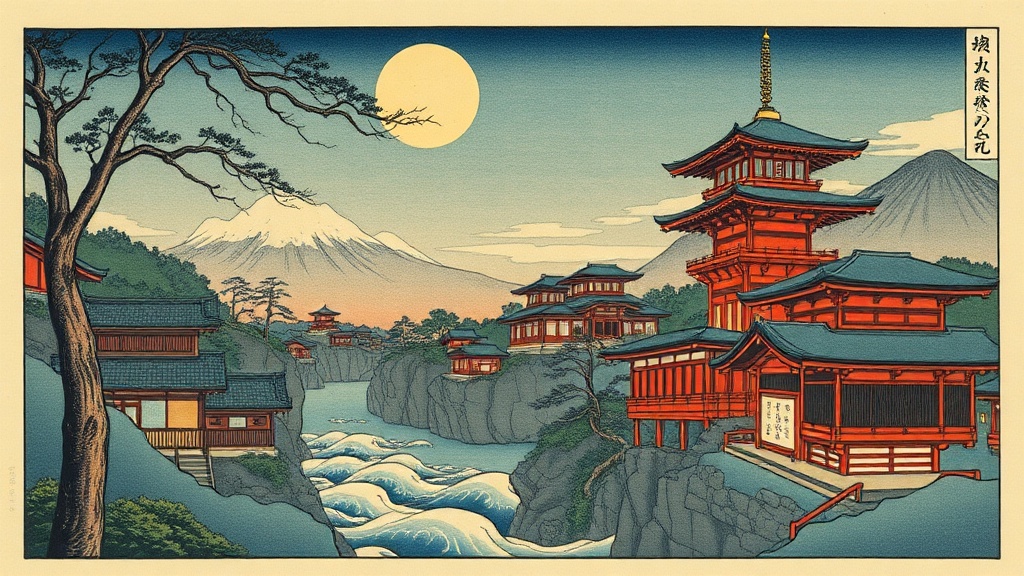
Tracing the Evolution of Japanese Woodblock Prints

A single sheet of mulberry paper, dyed with indigo and pressed with a hand-carved cherry wood block, carries more than just pigment; it carries the visual DNA of a changing nation. This guide examines the technical and cultural evolution of Japanese woodblock prints, known as ukiyo-e, from their origins in monochrome ink to the complex, multi-colored masterpieces that eventually stunned the Western world. Understanding this progression helps explain how a localized art form became a global phenomenon that influenced everything from Impressionism to modern manga.
We'll look at the technical shifts in printing methods, the changing social subjects of the Edo period, and the eventual decline of the medium during the Meiji era. It isn't just about pretty pictures. It's about how technology and class shifts dictate what art looks like.
What is Ukiyo-e and How Did It Start?
Ukiyo-e refers to "pictures of the floating world," a term describing the transient, hedonistic lifestyle of the urban merchant class during the Edo period. Originally, these prints weren't high art for the elite. They were cheap, mass-produced entertainment for the common person—much like modern posters or magazine covers.
The early stages of this medium relied heavily on sumizuri-e, which are single-color prints made using only black ink. If you look at early works from the 17th century, you'll see a heavy reliance on line work and shading to create depth. Artists often added color by hand after the printing process was finished—a tedious, expensive method that limited how many copies could actually be sold.
The transition from hand-colored prints to nishiki-e (brocade pictures) changed everything. This was the birth of full-color printing. By using multiple blocks—one for each color—artists could create incredibly intricate, layered images. It was a massive leap in production capability. It also meant that art was no longer just for the wealthy; it was accessible to anyone with a few copper coins.
The process was a collaborative effort involving four distinct roles:
- The Artist: Drew the original design on paper.
- The Carver: Transferred the drawing to a wood block, often destroying the original paper in the process.
- The Printer: Applied pigments and pressed the paper onto the blocks.
- The Publisher: The businessman who funded the project and handled distribution.
This division of labor is why the quality of a print often depended as much on the printer's skill as the artist's vision. A great artist with a bad printer resulted in a muddy, disappointing product.
How Did the Subject Matter Change Over Time?
As the Edo period progressed, the subjects of woodblock prints shifted from religious and mythological themes to the everyday fascinations of the urban population. This evolution tracked closely with the rise of a consumerist culture in cities like Edo (modern-day Tokyo).
Early subjects focused on the "floating world" of the pleasure districts. This included bijin-ga (pictures of beautiful women) and yakusha-e (portraits of Kabuki actors). These prints functioned as a type of celebrity culture. If a famous actor performed a specific role, fans wanted a print of him to display. It was the 18th-century equivalent of a movie poster or a high-end fashion magazine cover.
By the 19th century, the focus expanded significantly. Landscape art became a dominant force. This wasn't just a change in taste; it was driven by a rise in domestic travel and a growing interest in the natural beauty of Japan. Artists like Katsushika Hokusai and Utagawa Hiroshige mastered this. Their work—specifically Hokusai's Thirty-six Views of Mount Fuji—provided a sense of place and national identity that resonated deeply with the public.
The table below outlines the primary genres that defined the evolution of ukiyo-e:
| Genre Name | Primary Subject Matter | Key Era/Period |
|---|---|---|
| Bijin-ga | Beautiful women and fashion | Mid-Edo Period |
| Yakusha-e | Kabuki actors and theater scenes | Edo Period (Peak) |
| Meisho-e | Landscapes and famous places | Late Edo Period |
| Musha-e | Samurai and legendary warriors | Edo/Meiji Transition |
The shift toward landscapes was a brilliant move by publishers. It allowed the art to move beyond the "scandalous" reputation of the pleasure districts and into the homes of a broader, more conservative demographic. It turned ukiyo-e into a way to celebrate the Japanese landscape itself.
Why Did Japanese Woodblock Prints Influence Western Art?
The influence of ukiyo-e on Western art, a phenomenon known as Japonisme, occurred because of a combination of trade openings and accidental aesthetic shocks. When Japan ended its isolationist policy in the mid-19th century, many woodblock prints arrived in Europe—sometimes even as mere packing material for porcelain.
European artists were used to the strict rules of perspective and chiaroscuro (the use of light and shadow to create volume). Ukiyo-e threw those rules out the window. The prints used flat planes of color, bold outlines, and asymmetrical compositions. To an artist in Paris, this wasn't "incorrect" drawing; it was a revolutionary new way to see the world. It felt fresh. It felt alive.
The impact on the Impressionist and Post-Impressionist movements was profound. You can see the direct lineage of ukiyo-e in the works of:
- Vincent van Gogh: His use of bold outlines and vibrant, non-naturalistic colors was heavily inspired by Japanese prints.
- Claude Monet: His obsession with light and certain botanical subjects mirrors the structural approach of Hiroshige.
- Edgar Degas: His unusual cropping and off-center compositions owe a debt to the spatial logic of Japanese woodblocks.
This wasn't just a passing fad. The technical precision of the Japanese masters forced Western artists to reconsider the very definition of a "finished" painting. It pushed them toward abstraction and away from the rigid realism that had dominated European academies for centuries. For more detailed academic histories on this influence, the Metropolitan Museum of Art offers extensive digital archives on the impact of Japanese art on the West.
It's a strange irony that a medium designed for mass consumption in Japan became a high-art catalyst in Europe. The very thing that made it "cheap" in Edo—its reproducibility and bold, graphic style—is exactly what made it so striking to the Western eye.
As the Meiji Restoration brought rapid modernization and Western-style printing technology (like lithography) to Japan, the traditional woodblock process began to fade. The demand for hand-carved wood blocks dropped as photography and faster printing methods became the new standard for news and advertising. However, the DNA of these prints didn't disappear; it simply morphed. The graphic sensibilities of ukiyo-e—the clean lines, the expressive characters, and the flat color—eventually found a new home in the burgeoning world of Japanese manga and anime. The evolution didn't end; it just changed medium.